

Most security failures are not failures of equipment. They are failures of connection. A camera records an incident that nobody reviews until the following morning. A perimeter sensor raises an alarm that nobody can verify, so the response is delayed, cautious or abandoned. Bringing detection and video into a single monitored system closes that gap, and it is the thinking behind the converged alarms and CCTV work carried out by CTR Secure Services, where the WOLF perimeter detection and OWLS 4G CCTV platforms sit alongside 24/7 remote cctv monitoring system rather than operating as separate purchases.
This article sets out how the pieces fit together, what each element contributes, and the questions worth asking before a site commits to a design.
What a CCTV monitoring system actually does
A CCTV monitoring system is more than a set of cameras aimed at a gate. It is an integrated surveillance solution that combines strategically positioned cameras with detection equipment, analytics and audio, then routes what those components capture to somewhere a person is paying attention. The component list is familiar enough: cameras, video recorders, monitors and CCTV software, supplemented by detection devices that decide when the video matters.
The important distinction is the direction of travel. A recording system looks backwards, producing evidence after an event. A monitored system looks at what is happening now, and the purpose of the technology is to capture live events, archive footage and actively monitor a property. Only the first and third of those depend on someone watching. Archiving happens whether anyone is present or not.
Where standalone alarms fall short
An intruder alarm does one job well. It detects and it reports. What it cannot do is tell the person receiving the signal whether the cause is a person, an animal, the weather or a faulty contact. That uncertainty is expensive. It generates unnecessary call-outs, it wears down the patience of keyholders, and on some sites it results in no response at all because the activation cannot be verified.
Linking alarms to video changes the quality of the information reaching the Alarm Receiving Centre. A signal arrives with context. An operator can look at the zone that triggered and decide whether a police response, a keyholder, a mobile patrol or a guard already on site is the right answer. Industry guidance describes CCTV, remote monitoring and alarm receiving centres as an effective and efficient way of maintaining a safe and secure environment, and verification is a large part of the reason.
Why WOLF and OWLS are designed as a pair
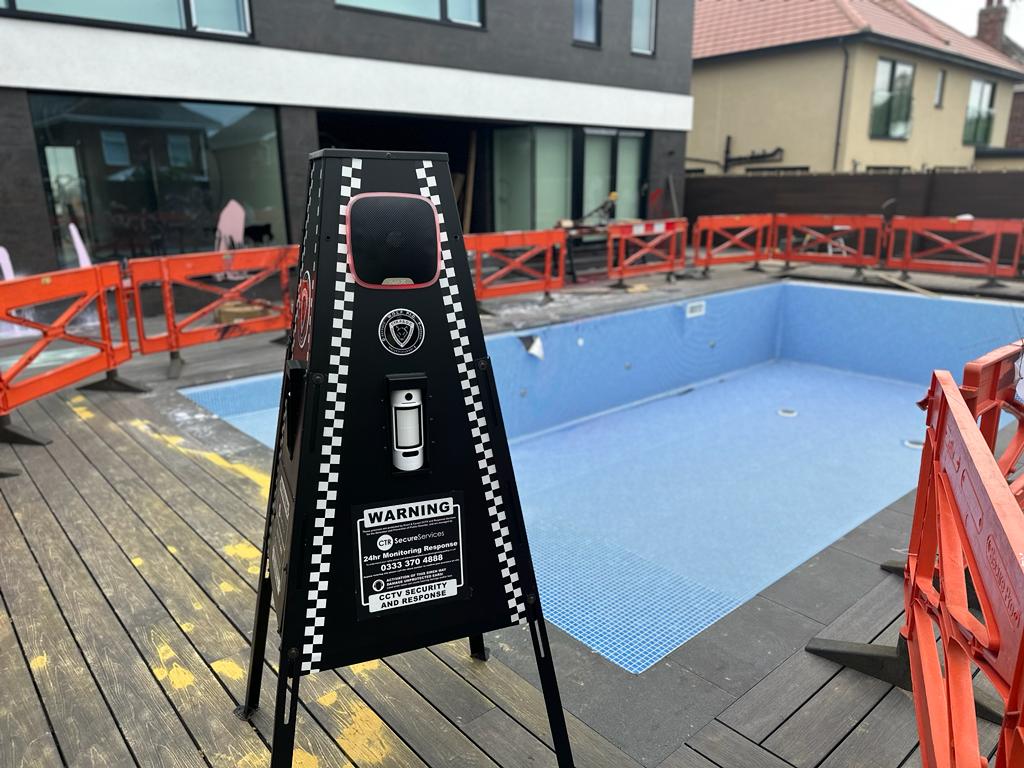
WOLF is CTR’s perimeter intrusion detection platform. OWLS is its 4G CCTV platform. Each is useful alone, but the pairing is what makes the system efficient, because detection tells the camera where to look and the camera tells the operator whether the detection is real.
That division of labour reduces two costs at once. The first is the cost of false alarms, which waste responder time and erode confidence in the system. The second is the cost of continuous video transmission and continuous human attention, since nobody needs to watch a quiet yard for hours if the cameras only demand attention when a boundary sensor reports activity.
WOLF: detection at the boundary
Perimeter intrusion detection moves the detection point away from the building and towards the boundary of the site. That shift buys time. An intruder who reaches a door has already crossed the grounds, and a response that begins at the door is starting late.
WOLF is British-made and forms part of CTR’s own IoT security technology, which means detection, video and monitoring can be specified as one design rather than assembled from unrelated suppliers. For sites with long boundaries, multiple access points or large areas of open ground, the perimeter is usually the most useful place for the first reliable signal to come from.
OWLS: video where fixed infrastructure is difficult
Many of the sites that most need surveillance are the ones least able to support a conventional installation. Vacant property awaiting refurbishment, construction compounds, temporary works, yards and remote assets all present the same difficulty: the site may not have a working fixed line, and even where it does, the connection can change as the project moves.
OWLS uses 4G connectivity to carry video, which reduces dependence on a fixed broadband service being present and operational at the site. That makes it suited to installations where the security requirement exists before the permanent infrastructure does, and where cameras need to be relocated as works progress. Site conditions, signal strength and camera positioning should still be confirmed during a survey before a design is agreed.
What the monitoring centre adds
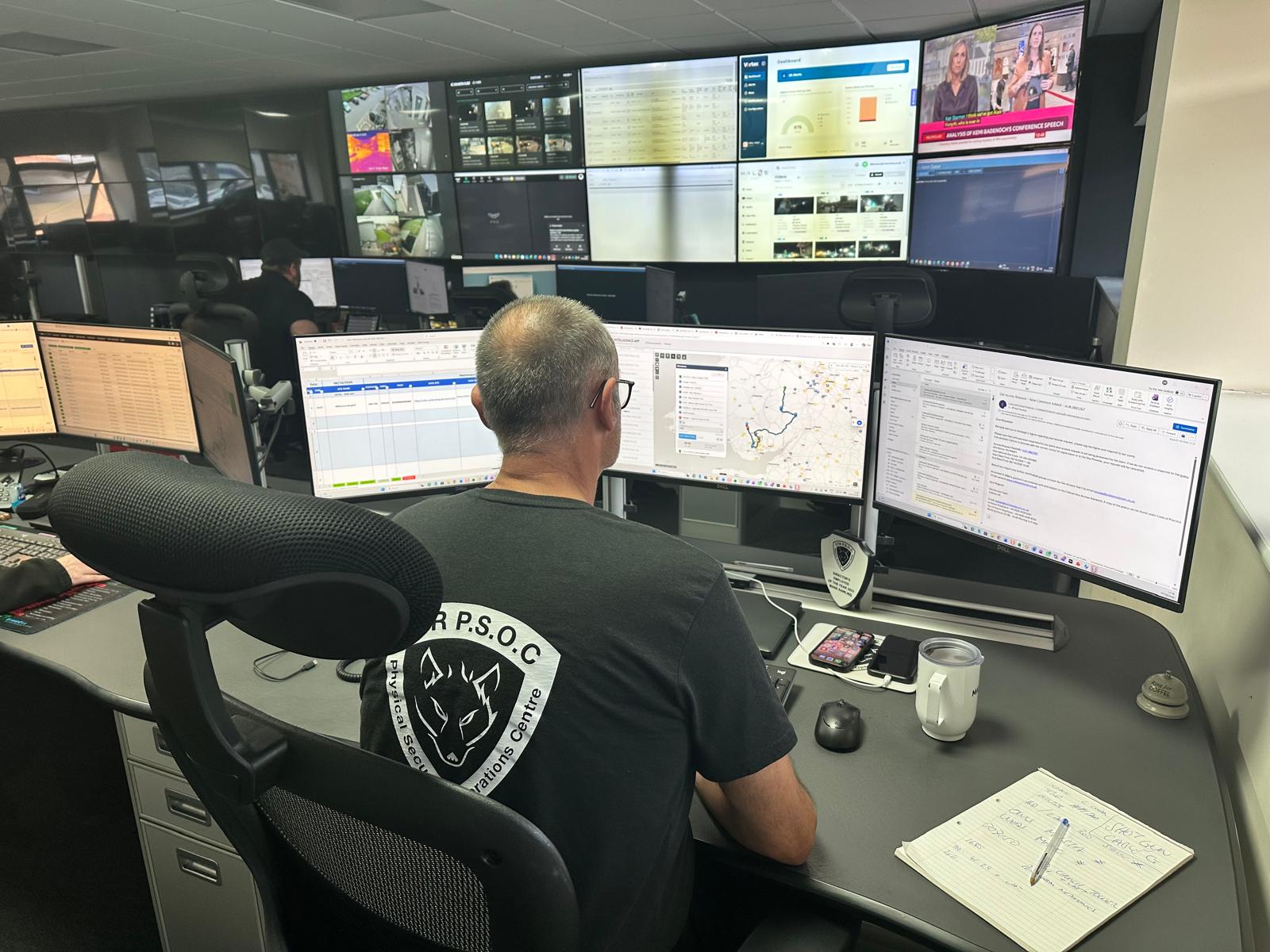
Remote monitoring connects a business to an Alarm Receiving Centre, where signals from alarms and cameras are received and acted upon. CCTV Monitoring system can be delivered by an in-house authorised team or outsourced to a dedicated remote monitoring provider. Both models can work. What matters is that someone is contracted, resourced and accountable for watching, rather than a system that merely has the capability to be watched.
Sensor activated CCTV monitoring system is the practical expression of this. Rather than treating every camera as a continuous feed that someone must stare at, the system raises the feed when a sensor has something to say. Operators then verify, record the outcome, and follow the escalation plan agreed for that site. CTR’s monitoring operation runs from its own control room and covers clients across the year, not only during office hours.
Audio has a role here too. Many monitoring systems include audio as a component alongside cameras and analytics, which allows an operator to challenge an intruder directly. A verbal challenge is often enough to end an incident before it becomes a loss, and it provides a documented response in the log.
Three configurations compared
Configuration | What happens on detection | Main strength | Main limitation |
|---|---|---|---|
Recording only | Footage is stored for later review | Low running involvement, useful as evidence | No live intervention, incidents are discovered late |
Alarm only, linked to an Alarm Receiving Centre | Signal is reported to the centre | Immediate notification, documented response | Cause of activation is unknown until someone attends |
Converged WOLF detection, OWLS video and remote monitoring | Detection triggers video review, verification and a response decision | Verified response, fewer wasted call-outs, evidence captured in parallel | Requires careful design, commissioning and a clear escalation plan |
Matching the design to the site
There is no single correct configuration. The right balance of perimeter detection, camera coverage and monitoring hours depends on what the site contains and what a loss would cost.
Retail environments benefit from coverage of entrances, stock areas and yards, with detection linked to verification so that out-of-hours activations can be assessed quickly.
Vacant property carries risks from intrusion, vandalism and asset stripping, and often has no reliable fixed connectivity, which is where a 4G solution earns its place.
Construction and civil engineering sites change shape week by week, so portability and rapid redeployment matter as much as coverage.
Corporate and executive premises usually combine monitored detection with physical guarding or close protection, so the technology feeds a wider protective plan rather than replacing it.
Buying outright or hiring
Installation models vary. Some sites purchase equipment outright and treat it as capital infrastructure. Others hire, which spreads the cost and keeps the system aligned with a project that has a defined end date. CTR installs CCTV for UK businesses and construction sites and offers both purchase and hire arrangements, with monitoring delivered from its own control room. Prospective clients should ask for a written scope covering equipment ownership, monitoring terms and what happens at the end of a hire period, since these details vary between providers and contracts.
Questions worth putting to a monitoring provider
Which Alarm Receiving Centre receives our signals, and who verifies an activation before a response is requested?
What is the escalation path for a confirmed intrusion, and who is contacted first?
Can operators use audio to challenge intruders, and is that within the agreed scope?
How long is footage retained, and how is access to it controlled?
What commissioning, maintenance and false alarm management is included?
How are system health and connectivity monitored, particularly on 4G sites?
Where people fit into a technology-led system
Technology detects and verifies. It rarely detains, escorts or reassures. That final step belongs to people, whether a guard on site, a mobile patrol, or a close protection team working with a residential or executive client. CTR operates a Physical Security Operations Centre that brings monitoring, alarm receiving and deployed personnel under one roof, alongside guarding and protective services delivered in the UK and Denmark.
The practical benefit of a converged approach is that the same organisation can be accountable for the sensor, the camera, the operator and the responder. When something goes wrong at three in the morning, there is one number to call and one record to consult, which is a good deal simpler than reconstructing events from four separate suppliers.
Frequently Asked Questions
Can anyone monitor a CCTV system?
Technically yes, and the real question is authorisation and resourcing. Monitoring can be carried out by an in-house authorised team or outsourced to a dedicated remote monitoring provider working from an Alarm Receiving Centre. What matters is that someone is formally responsible for watching, that access to footage and live feeds is controlled, and that a documented escalation route exists when something happens.
Is a monitored alarm the same as monitored CCTV?
No. A monitored alarm reports an activation to an Alarm Receiving Centre but gives the operator no view of the cause. A monitored CCTV system adds video, and often audio, so the activation can be verified before anyone is dispatched. The two are complementary, and pairing detection with cameras is what produces the most useful signal for a responder.
What happens when WOLF detects an intrusion out of hours?
The detection is reported to the monitoring centre, where an operator reviews the associated OWLS video to establish whether the cause is genuine. The response then follows the escalation plan agreed for that site, which may involve an audio challenge, keyholder notification, a mobile patrol or police attendance. The value lies in verification happening before a response is committed.
Can a site without a fixed phone line still be monitored?
OWLS uses 4G connectivity to carry video, which reduces the site’s dependence on a working fixed line being present. Power availability, camera placement and local signal strength still need to be assessed during a survey. Any site without mains services should raise this with the provider early so the design reflects what can actually be achieved there.
How do I know which configuration suits my premises?
Start with a site survey and a clear statement of what a loss would cost. Detection at the perimeter, camera coverage, monitoring hours and physical response should all be sized against that risk rather than chosen from a standard package. Ask for the design to be explained in writing, and confirm what is included in monitoring fees before signing.